A Lump or Bump on Your Gum? Here’s What It Could Mean (Pictures)
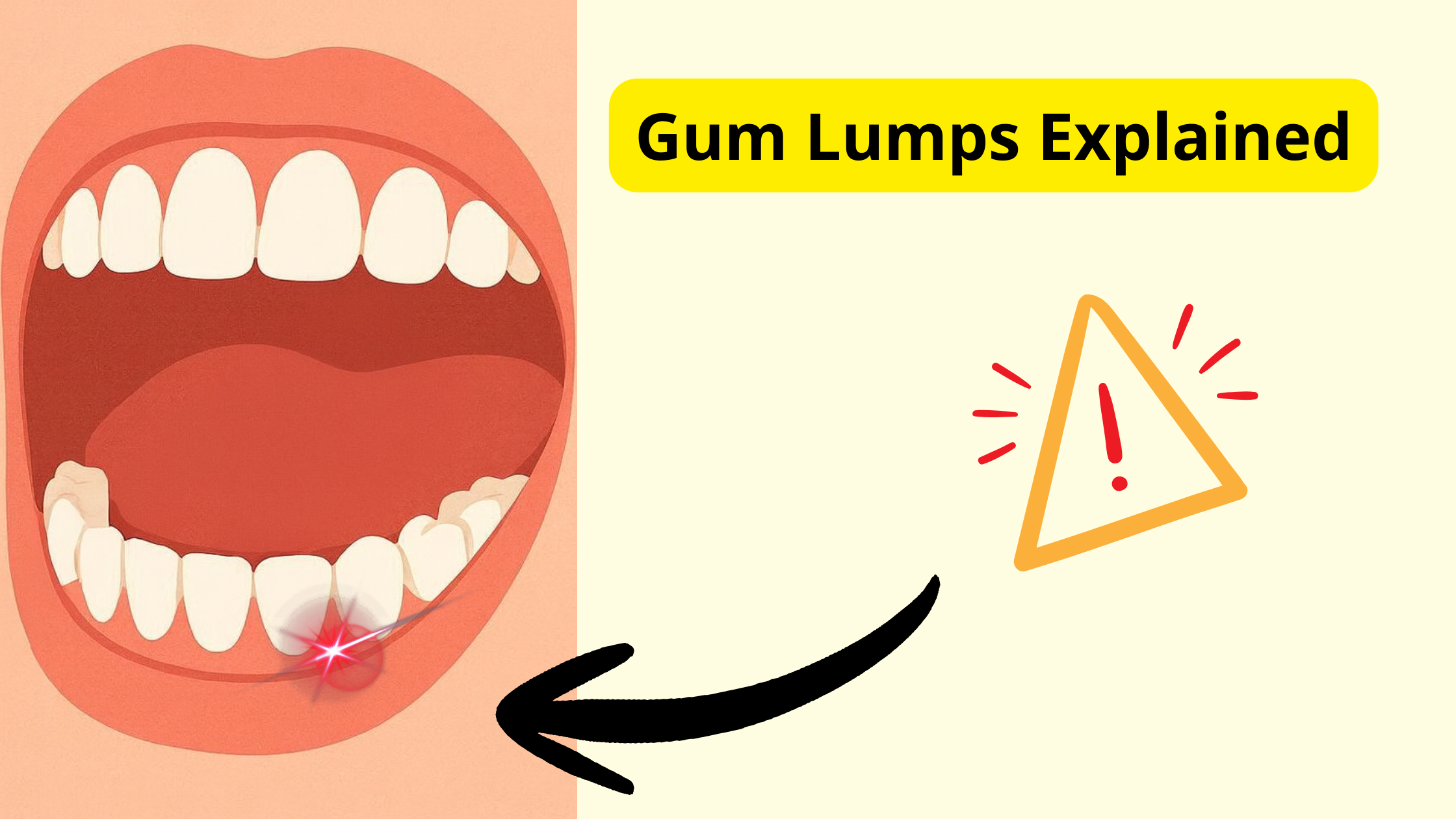
Your gums, like any other soft tissue in your body, are not immune to problems.
Most gum issues start with plaque—a soft, whitish film full of bacteria that constantly builds up on your teeth and along the gum line.
When these harmful bacteria are not removed, they can slip under the gum line and trigger inflammation and swelling.
A lump on the gums is also a common sign of a tooth infection. Untreated cavities can cause bacteria to spread beyond the tooth into the surrounding bone and nearby gum tissue. This leads to a soft, tender lump called an abscess, or commonly, a “gum boil.”
These are just a few of the most common causes. There are also less common conditions that can lead to a bump on the gums. In this article, we’ll break down the possible cause, their treatments, and the best way to prevent such problems in the future.
In this article...
1. Gum Inflammation (Gingivitis)
2. Gum Abscess
3. Benign Gum Growth (Large, Painless Lump)
4. Dental (Jaw) Cyst
How to Care for Your Gums and Prevent Problems
1. Gum Inflammation (Gingivitis)
Any form of gum swelling—especially along the gum line—is likely to be a sign of gum inflammation, also known as gingivitis.
Chronic gum inflammation affects nearly 90% of adults worldwide to some degree. That number may sound surprising, but gingivitis is often very mild and easy to miss. In other cases, it can cause more noticeable symptoms such as diffuse redness, swelling, and bleeding when brushing or flossing.
So what’s the main cause of gum inflammation? Plaque, and more specifically, the bacteria inside it.
No one is immune. Even those with the strongest immune system can develop gingivitis if brushing and flossing are skipped or not done properly.
Over time, plaque can harden and turn into tartar (calculus). Tartar is much stickier and harder to remove at home. Once it forms, harmful bacteria can thrive and start damaging the bone and ligaments that hold your teeth in place. This more advanced stage of gum disease is called periodontitis, which is the leading cause of tooth loss in adults.
Certain factors can make gum swelling worse, including hormonal changes (such as during pregnancy) and some medications. If a medication is contributing to gum inflammation, it must be replaced or the dose adjusted.
Treatment
As long as the inflammation is limited to the gums, gingivitis is completely reversible. Improving your daily oral hygiene is often all it takes to bring your gums back to health.
However, once tartar has formed, it cannot be removed with brushing or flossing. Only your dentist or hygienist has the tools needed to remove it effectively.
Another reason you should see your dentist is to check the health of the deeper tissues that support your teeth, such as the bone and ligaments. If these structures are affected, a professional deep cleaning may be necessary to stop the disease from progressing.
2. Gum Abscess
A gum abscess is another very common cause of a lump on the gums. Also known as a gum boil, it’s a sign of a severe infection that usually comes from either a severely decayed tooth or advanced gum disease.
Gum abscesses are typically red, soft, painful, and warm. A telltale sign is pus leakage. When pressure is applied, a pale yellowish fluid may leak out, and you might feel fluid moving inside the lump, a sign we call “fluctuation.”
Most gum abscesses are caused by untreated cavities. So, if the lump is located near a badly decayed tooth, there’s a high chance it’s coming from a tooth infection.
A gum abscess can also develop when something gets trapped under the gum line—such as food debris, a piece of tartar, or another foreign object.
Sometimes the pain may get better or disappear on its own, but that doesn’t mean the infection has healed.
Treatment
The treatment for a gum abscess or any dental infection should never be delayed, as it can’t heal on its own. It can only spread and get worse.
Your dentist will first drain the abscess to relieve pressure. After that, the underlying cause must be treated.
This may involve a root canal treatment to clean and disinfect the infected tooth, or a deep dental cleaning if gum disease is the source of the problem.
3. Benign Gum Growth (Large, Painless Lump)
A large, painless bump on the gums can be caused by a benign gum growth, medically known as an epulis. They may look alarming, but they are usually painless and completely harmless.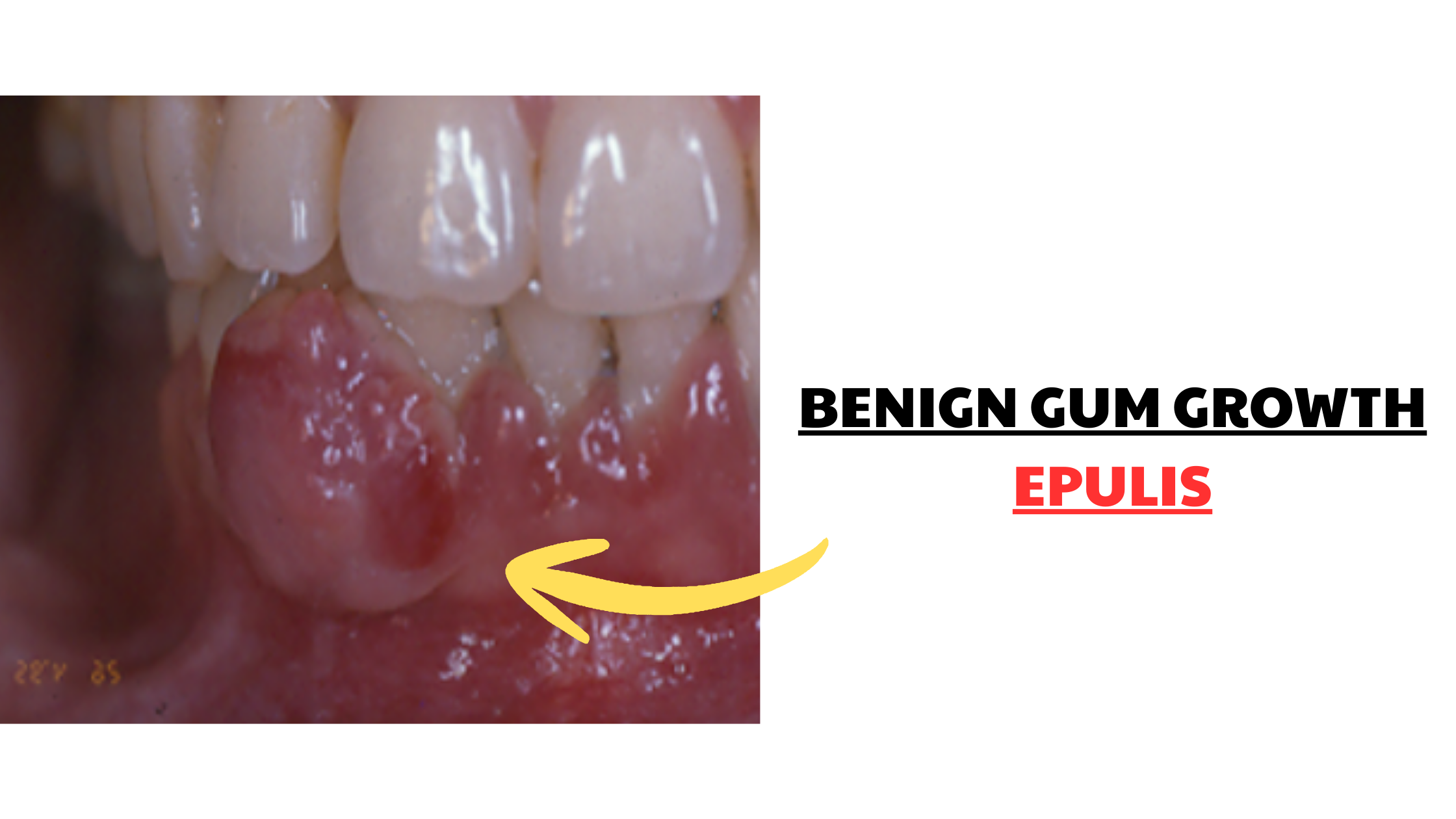
This type of growth usually develops as a reaction to chronic irritation or repeated trauma. Common triggers include ill-fitting dentures, calculus buildup, or any other foreign object constantly rubbing against the gums.
It can feel soft or firm to the touch and can grow quite significantly large due to excess scar tissue formation and inflammation. It may grow so large that it completely covers nearby teeth.
The surface of the growth is often red and inflamed and tends to bleed easily when touched or injured.
In some cases, actual bone tissue can form inside the growth, giving it a very hard, bone-like feel.
Treatment
Treatment involves surgical removal of the growth. This is a minor, straightforward, and generally painless procedure performed by your dentist.
After removal, it’s essential to eliminate the source of irritation—such as adjusting a denture or removing tartar—to prevent the lump from coming back.
4. Dental (Jaw) Cyst
A dental cyst is an abnormal sac filled with fluid or air that can develop inside the jawbone.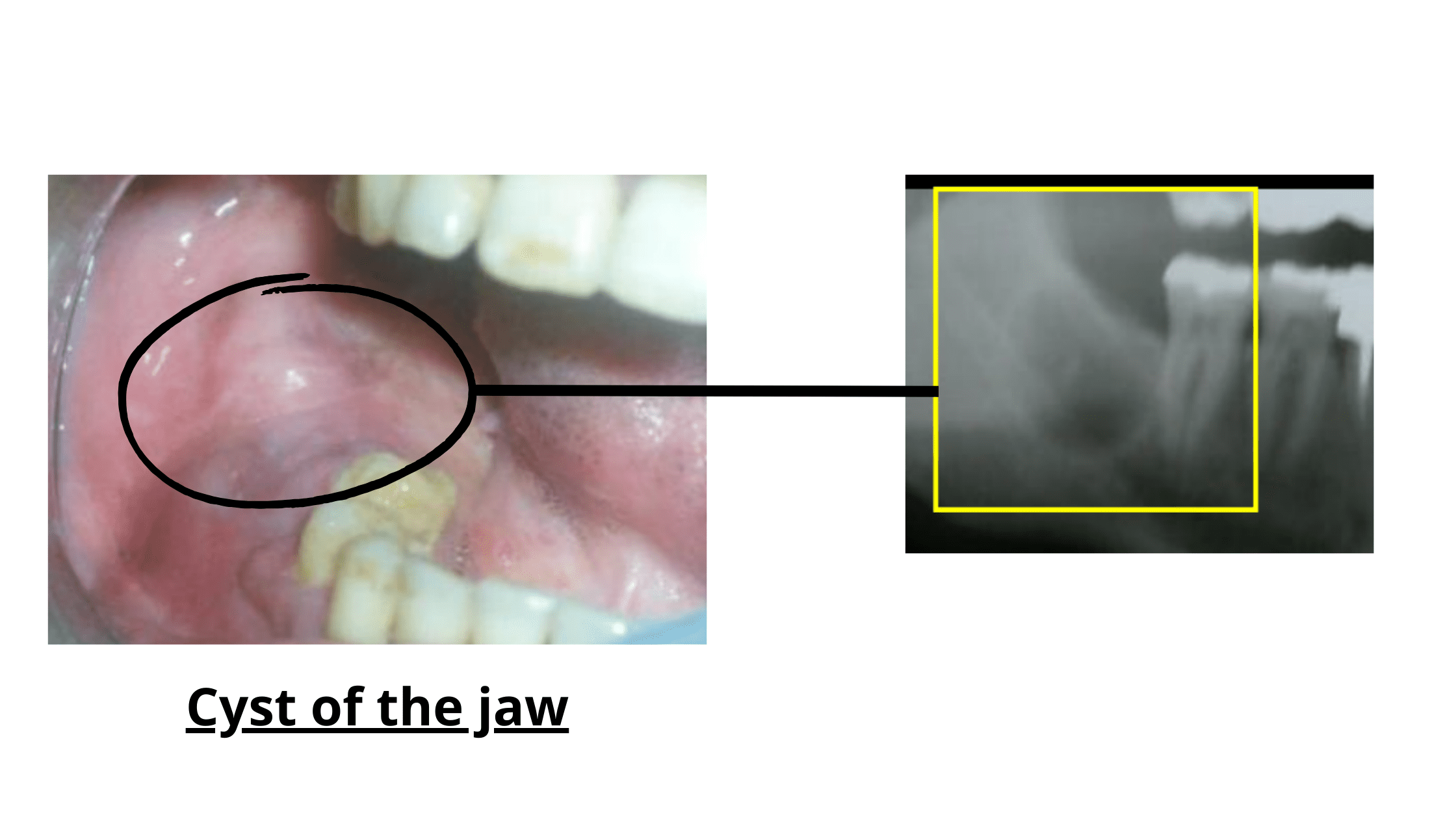
Jaw cysts usually grow very slowly and often remain painless and symptom-free for years. Most people don’t realize they have one until it’s discovered on a routine dental X-ray, or until the cyst becomes large enough to cause visible swelling.
Most dental cysts are found near teeth that are still developing, such as wisdom teeth, or around teeth affected by chronic, long-standing dental infections.
When a cyst becomes visible through the gums, it means it has grown quite large and has pushed its way outward from the jawbone. However, this process happens gradually and typically follows these stages:
- Early stage: The cyst is confined within the jawbone. At this point, you won’t notice any symptoms.
- Expansion stage: As the cyst grows, it presses against the surrounding bone, causing distortion. This may appear as a firm or hard lump on the gums.
- Advanced stage: The cyst eventually breaks through the bone and reaches the gum tissue. At this stage, it often feels soft and compressible like a balloon when touched.
Treatment
Jaw cysts require surgical removal. Depending on the size and location of the cyst, this may be done with or without removing the affected tooth.
How to Care for Your Gums and Prevent Problems
As we’ve seen, most gum issues are caused by bacteria in plaque and tartar. The best way to fight plaque is through consistent, proper daily oral hygiene.Brushing your teeth correctly is key. Many people use horizontal back-and-forth strokes and miss the most important area—the gum line, where bacteria often hide.
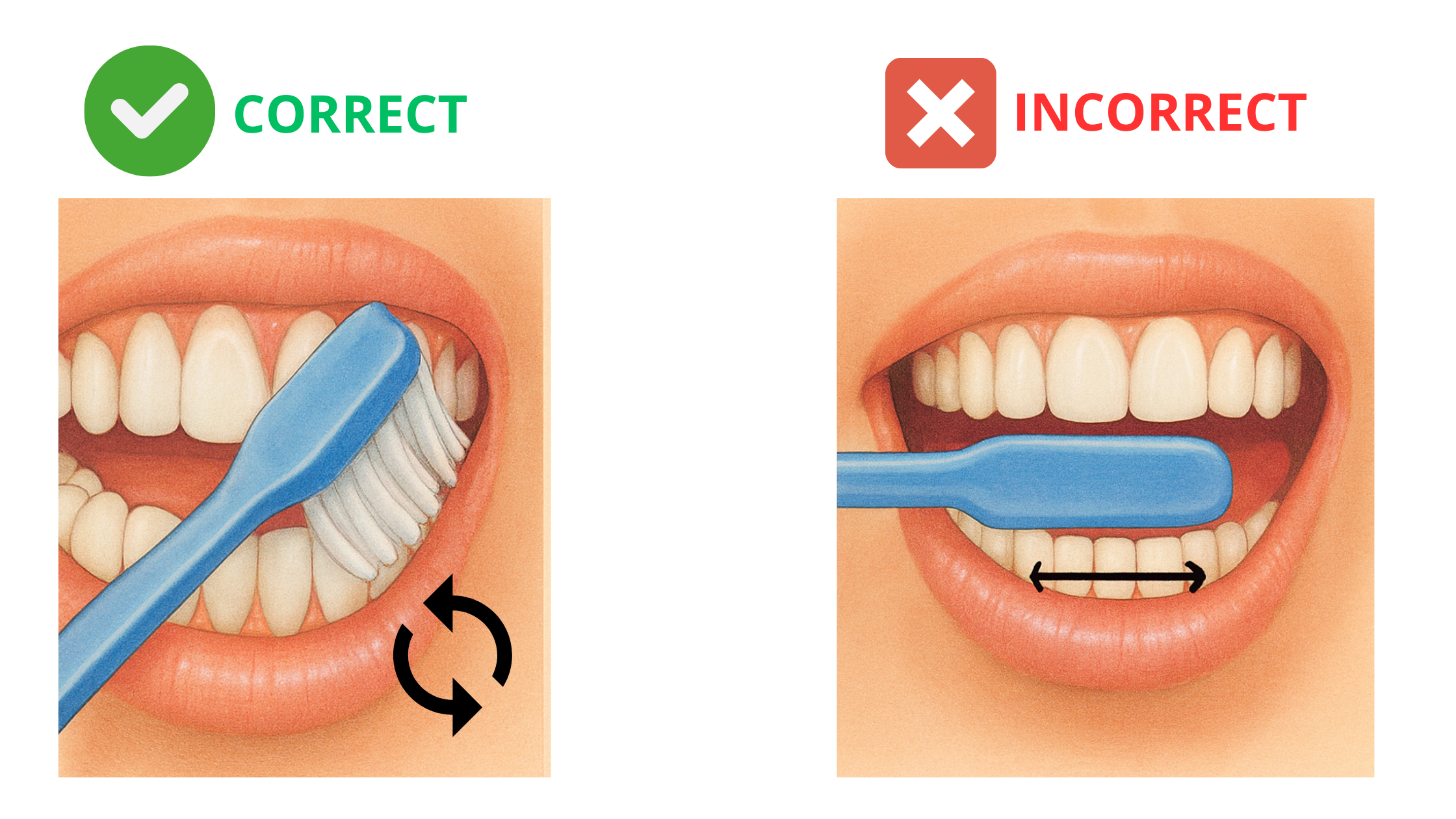
A better technique is to use small circular motions, angling your toothbrush about 45 degrees toward the gum line. This cleans both your teeth and gums while gently stimulating healthy blood flow.
Brush at least twice a day for two full minutes. Make sure to use a soft-bristled toothbrush and replace it every 2–3 months.
And don’t forget to floss! The spaces between your teeth are perfect hiding spots for bacteria and food debris that brushing alone can’t reach. Flossing once a day, ideally before bed, helps keep these areas clean, freshens your breath, and supports strong, healthy gums.